
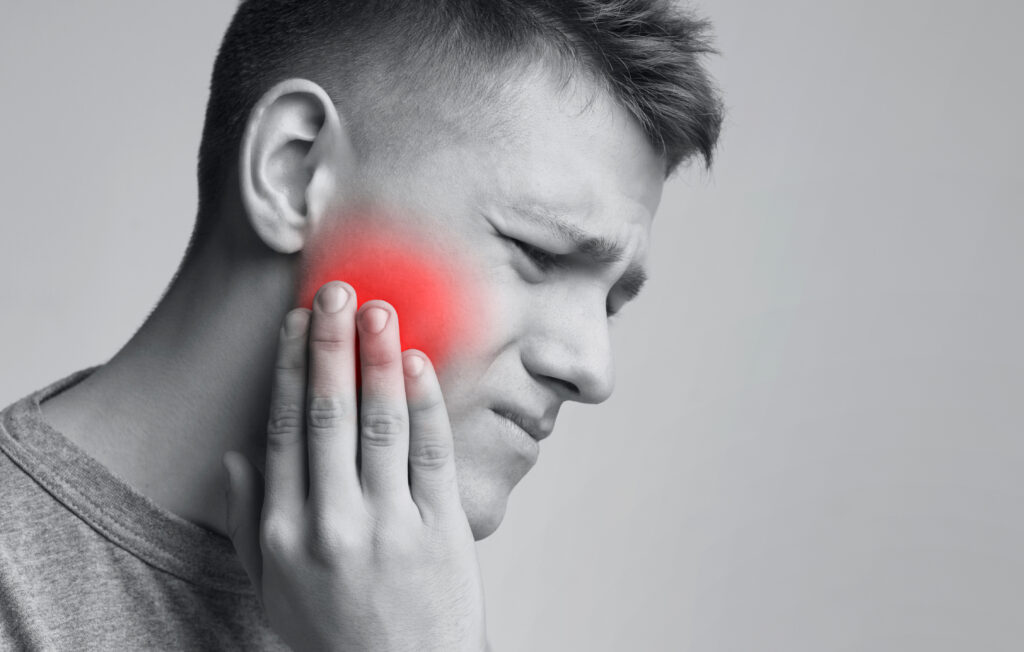
Any type of pain can be debilitating and make it more difficult for you to function on a daily basis. Jaw pain is no exception. In this article, we are going to discuss the causes and symptoms of jaw pain, and how physical therapy for jaw pain can help you work through it.
This article is general information, not a diagnosis. If your jaw is bothering you, a physician or physical therapist can evaluate it and recommend the right plan for you.
What Is TMD?
Temporomandibular joint disorder (TMD/TMJ) is a condition that limits the basic functions of the jaw, like opening your mouth or chewing. Your jaw consists of two bones and a disc, and the pain stems from when they are misaligned or not functioning properly. Sometimes, your jaw will lock, or you will feel a painful popping or muscle spasm. Other symptoms can include headaches, earaches, and neck or shoulder pain.
What Causes TMD?
TMD can be caused by a number of factors. It might be related to a jaw injury, arthritis, or teeth grinding and clenching, or it could be a result of lifestyle choices. An example of a lifestyle factor is having bad posture that results from spending a lot of time sitting at our desks and working on our laptops or phones. When your head is down for long periods of time, the muscles below your chin are strained, causing your jaw to pull back. It can also be caused by sleeping on your stomach, due to your neck being forced to rotate to keep an open airway, which in turn puts stress on your jaw.
Traditional TMD Treatments
There are some ways you can ease jaw pain at home, such as using heat or ice to help with pain and inflammation or massaging the muscles. However, jaw pain can often persist and get worse, which is where physical therapy for jaw pain can help.
How Long Does TMJ Pain Take to Feel Better?
Recovery time varies from person to person, depending on what is causing your symptoms and how long you have had them. Some people notice their jaw feels better within a week or two, while others with longer-standing TMD need care over several weeks or more. After your evaluation, your physical therapist will give you a realistic timeline and adjust it as you progress.
The biggest factor you control is consistency. Your sessions are only part of the plan; the home exercises your physical therapist gives you, like posture work and gentle low-load strengthening, are what help your progress carry over into daily life. Skipping them, or stopping as soon as the pain eases, can make it more likely that symptoms come back. If an exercise hurts or you are unsure you are doing it right, bring it up at your next visit so your therapist can adjust it.
What to Avoid During TMD Treatment
While your jaw is healing, a few everyday habits can add strain and slow your progress. Your physical therapist will tailor this list to you, but common ones to avoid include:
- Hard, chewy, or crunchy foods, such as tough meats, hard candy, or ice
- Taking large bites or opening your mouth very wide
- Chewing gum, or chewing on pens, pencils, or your nails
- Clenching your teeth during the day (try resting with your teeth slightly apart and your jaw relaxed)
- Using your teeth as tools, like tearing open packages
- Sleeping on your stomach or spending long stretches looking down at your phone
If you grind your teeth at night, ask your dentist whether a mouth guard could help.
How Physical Therapy for Jaw Pain Works
Physical therapists who specialize in orthopedic physical therapy are experienced in identifying what is causing your jaw pain. They will check if the joints in your jaw are stiff and then give you tips on how to address your TMD/TMJ. The first method they will often try is manual therapy, using hands-on techniques to ease tight muscles and stiff joints that may be contributing to your pain.
If appropriate, your physical therapist may also use treatments such as ultrasound therapy, which involves applying deep heat into the muscles and joints, and TENS, which applies a mild electrical current over the jaw joint. Both are commonly used to help relax muscles and ease tension, and they work best alongside exercise and education rather than on their own.
They can also teach you exercises to do at home that will help support your recovery. An example of one of these exercises is practicing good posture. We advise being mindful of keeping good posture and moving devices to eye level, as well as practicing strengthening exercises for your neck and middle back.
A second example of an exercise your physical therapist might suggest for TMD is a “low-load” exercise, which strengthens the muscles without putting a lot of strain on them.
They will also give you tips on how to prevent TMD moving forward. Practices such as avoiding smoking, eating hard foods, and chewing gum frequently can all help protect you from jaw pain in the future.
Frequently Asked Questions
Do I need a referral for jaw pain treatment?
Not always. In Pennsylvania, physical therapists who hold a direct access certificate can evaluate and treat you without a physician’s referral for up to 30 days from your first treatment. Core 3’s therapists are certified in direct access physical therapy, so you can schedule with us directly. Some insurance plans have their own referral rules, so it is worth checking your coverage before your first visit.
Should I see a dentist or a physical therapist for jaw pain?
Often, both can play a role. A dentist can check for teeth grinding, bite issues, or whether a mouth guard would help, while a physical therapist focuses on jaw movement, muscle tension, posture, and exercises. If you are not sure where to start, your physician or physical therapist can help you coordinate care.
What should I expect at my first physical therapy visit for jaw pain?
Your therapist will start by asking about your symptoms and daily habits, then check how wide you can open your mouth, feel your jaw joints as you move, and look at your neck and posture. From there, you will build a plan together, often starting with a few home exercises.
Get Help for Jaw Pain at Core 3 Physical Therapy
Having jaw pain is an uncomfortable situation to be in, but through exercise and physical therapy for jaw pain, you can get help dealing with your symptoms. At Core 3, our board-certified specialists provide one-on-one care, starting with a thorough look at your jaw, neck, and posture so your plan fits what is actually going on.
We’d love to help you chew, talk, and rest more comfortably. Visit any of our five clinics:
- Hatfield: 1691 Bethlehem Pike, Hatfield, PA 19440 | 267-308-5330
- East Norriton: 325 W. Germantown Pike, Ste. 105, East Norriton, PA | 267-534-7614
- Chalfont: 100 Stewart Lane, Ste. 100, Chalfont, PA 18914 | 215-789-6543
- Limerick: 536 North Lewis Rd, Limerick, PA 19468 | 484-938-5403
- Warrington: 865 Easton Rd, Suite 190, Warrington, PA 18976 | 267-748-2081
To request an appointment, contact Core 3 Physical Therapy or call the clinic closest to you.
