
How Graston Technique Treats Soft Tissue Fibrosis: A Physical Therapist’s Guide
Graston Technique for Soft Tissue Fibrosis: What Pennsylvania Patients Need to Know
Soft tissue fibrosis doesn’t always start with a dramatic injury. Sometimes it builds quietly — after a strain that never fully healed, a surgery that left scar tissue behind, or years of repetitive movement that gradually restricted how your body feels and functions. If you’ve been living with persistent tightness, limited range of motion, or pain that just won’t resolve, understanding how Graston Technique treats soft tissue fibrosis may be the turning point in your recovery.
Graston Technique is a specialized form of Instrument-Assisted Soft Tissue Mobilization (IASTM) used by licensed physical therapists to detect and treat areas where fibrous tissue has built up and disrupted normal movement. At CORE 3 Physical Therapy, our board-certified specialists use this evidence-based approach as part of individualized treatment plans for patients across Bucks and Montgomery Counties, Pennsylvania. No referral needed — Pennsylvania is a Direct Access state, which means you can start the process today.
What Is the Graston Technique?
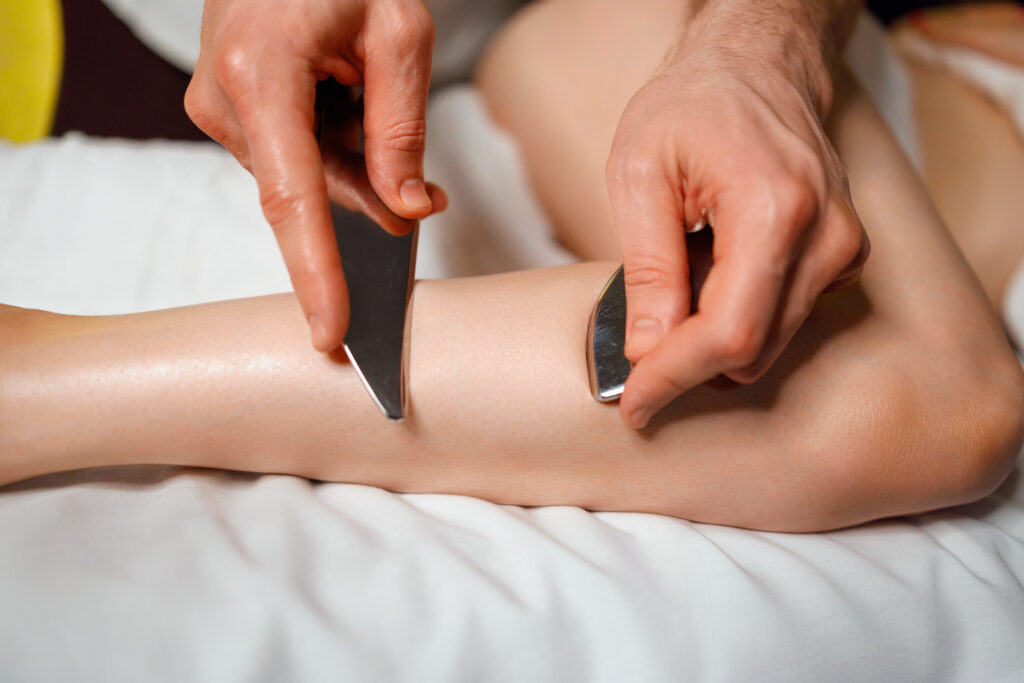
The Graston Technique is a clinically developed, evidence-based form of IASTM therapy — Instrument-Assisted Soft Tissue Mobilization — that uses a set of six stainless steel tools to identify and treat dysfunction in the body’s soft tissues. Each tool is ergonomically contoured to match different anatomical regions, allowing your physical therapist to work with precision across muscles, tendons, ligaments, and fascia.
Here’s what typically happens during a Graston Technique session at CORE 3:
- Warm-up: The target area is prepared with light movement or heat to increase blood flow and make the tissue more receptive to treatment.
- Assessment: Your therapist glides the instrument over the skin, using the tool’s vibration and resistance to detect areas of restriction, adhesion, or fibrosis — often before you’ve even identified them yourself.
- Treatment: The tool is applied with controlled pressure using specific strokes across the affected area. This stimulates circulation, breaks up fibrous buildup, and signals the body to begin remodeling the tissue.
- Stretching and strengthening: Each session ends with targeted exercises to reinforce the mobility gains made during treatment and support long-term recovery.
As for what it feels like — most patients describe a firm, focused pressure, similar to deep tissue work but more precise. Some mild soreness or temporary redness in the treated area is normal and typically resolves within 24 to 48 hours. Your therapist controls the pressure throughout, adjusting based on your tolerance and the severity of the tissue restriction.
Graston Technique is not a standalone treatment. At CORE 3, it’s integrated into a broader soft tissue fibrosis physical therapy plan tailored specifically to your condition, history, and recovery goals.
How Graston Technique Treats Soft Tissue Fibrosis
When soft tissue fibrosis develops, the body has essentially laid down disorganized collagen fibers in response to injury, inflammation, or repetitive stress. These fibers form adhesions — dense, rigid areas of tissue that restrict movement, compress nerves, and generate pain. Understanding how Graston Technique treats soft tissue fibrosis means looking at what’s actually happening beneath the skin, and why targeted instrument-assisted therapy produces results that rest and passive treatment simply can’t replicate.
Breaking Down Scar Tissue and Adhesions
Scar tissue and adhesions are the structural core of soft tissue fibrosis. When the body heals from injury — whether from a sprain, a surgical incision, or chronic overuse — it produces collagen rapidly and without the organized alignment found in healthy tissue. The result is a dense, fibrous web that binds surrounding structures together and limits how freely muscles, tendons, and fascia can move.
The stainless steel instruments used in Graston Technique physically engage these adhesions. As the tool moves across the skin, it creates a controlled mechanical force that separates fibers, disrupts cross-linked collagen, and begins restoring the tissue’s structural integrity.
Stimulating the Body’s Natural Healing Response
One of the most clinically significant aspects of how Graston Technique treats soft tissue fibrosis is what happens after the tools are applied. The controlled microtrauma introduced during treatment triggers a localized inflammatory response — intentionally. This signals the body to send fibroblasts to the area, the cells responsible for producing new, properly aligned collagen.
This is the biological reset that makes IASTM therapy for fibrosis different from massage or passive stretching. Rather than working around the fibrotic tissue, Graston Technique initiates a remodeling process at the cellular level. A 2025 review published in the International Journal of Creative Research Thoughts confirmed that IASTM stimulates fibroblast proliferation and promotes more organized collagen synthesis — which translates directly into improved tissue quality and reduced restriction over time.
Restoring Range of Motion and Flexibility
Fibrotic tissue is mechanically stiff. It doesn’t stretch the way healthy soft tissue does, and over time that stiffness compounds — adjacent muscles compensate, movement patterns shift, and what started as a localized restriction begins affecting the way your entire body moves.
Soft tissue fibrosis physical therapy using the Graston Technique directly addresses this by improving tissue extensibility session by session. As adhesions break down and new collagen is laid in a more functional alignment, the treated area regains its capacity to lengthen and load properly. Patients commonly report measurable improvements in range of motion within the first few sessions — not because the pain has been masked, but because the structural barrier to movement has been reduced.
At CORE 3, range of motion is assessed and tracked across your treatment plan so progress is documented, not just felt.
Reducing Chronic Pain and Inflammation
Chronic pain associated with soft tissue fibrosis is rarely simple. It often involves a combination of mechanical compression — where dense fibrous tissue presses on nerves or restricts blood flow — and a sensitized pain response that has persisted long after the original injury. IASTM therapy for fibrosis addresses both pathways.
By breaking down the structural restrictions that create mechanical pain and stimulating healthy tissue remodeling, Graston Technique reduces the ongoing source of irritation rather than simply managing symptoms. Improved circulation to the treated area also helps clear inflammatory byproducts that accumulate in fibrotic tissue. Over a course of treatment, most patients experience a meaningful reduction in both the intensity and frequency of pain — alongside the functional gains in mobility that make daily activity feel manageable again.
Signs and Symptoms You May Have Soft Tissue Fibrosis
Soft tissue fibrosis doesn’t always announce itself clearly. For many patients, it develops gradually — the result of an old injury that never fully resolved, a post-surgical healing process that left behind excess scar tissue, or years of repetitive strain that accumulated without a single identifiable incident. Knowing what to look for is the first step toward getting the right care.
Persistent Pain or Tenderness in One Area
One of the most common indicators of soft tissue fibrosis is localized pain that keeps returning to the same spot — even without a new injury to explain it. This isn’t the generalized soreness that follows exercise or a long day on your feet. It’s a consistent, often deep tenderness concentrated in a specific muscle, tendon, or fascial area that doesn’t follow the typical pattern of healing over time.
If you find yourself repeatedly icing the same spot, avoiding certain movements to protect a particular area, or waking up with pain in the same location day after day, fibrotic tissue buildup may be the underlying cause. This is exactly the type of presentation that soft tissue fibrosis physical therapy — including Graston Technique — is designed to address at the source.
Limited Range of Motion or Stiffness
Healthy soft tissue is pliable. It stretches, compresses, and moves in coordination with the structures around it. Fibrotic tissue doesn’t behave that way. As collagen fibers accumulate in a disorganized pattern, they create a mechanical restriction that limits how far a joint or muscle can move through its normal range.
You might notice this as an inability to fully extend your knee after a ligament injury, tightness in your shoulder that prevents you from reaching overhead, or a stiffness in your lower back that’s most pronounced first thing in the morning and after periods of inactivity. In many cases, patients have adapted their movement so gradually that they don’t realize how much range they’ve lost until a physical therapist assesses them directly. At CORE 3, that assessment is part of every initial evaluation — and it often reveals restrictions that haven’t yet become painful but are already affecting function.
Feeling of Tightness or a Knot Under the Skin
Fibrotic tissue has a distinct texture. When a physical therapist runs an instrument or their hands across an affected area, they can often detect the difference between healthy tissue and a zone of fibrosis — and patients frequently describe feeling it themselves as a persistent knot, lump, or band of tightness beneath the skin.
This is the physical manifestation of the adhesions and disorganized collagen that define soft tissue fibrosis. The sensation may be accompanied by a pulling feeling when you move the affected area, or a tenderness when direct pressure is applied. If you’ve ever noticed a spot that always feels “tight” no matter how much you stretch it, or a band of tissue that feels thicker or less yielding than the surrounding area, that’s worth having evaluated. Understanding how Graston Technique treats soft tissue fibrosis begins with correctly identifying where the fibrosis is — something the stainless steel instruments are specifically designed to help clinicians do.
Pain That Doesn’t Improve With Rest Alone
Rest has a role in recovery — but with soft tissue fibrosis, it has a ceiling. Because the problem is structural rather than purely inflammatory, taking time off doesn’t change the underlying tissue. The disorganized collagen remains. The adhesions remain. And when you return to activity, so does the pain.
This is one of the most frustrating patterns patients describe before seeking soft tissue fibrosis physical therapy: taking a week off, feeling marginally better, returning to normal activity, and finding the same pain waiting for them within days. If that cycle sounds familiar, it’s a strong signal that rest alone isn’t the solution — and that the tissue itself needs to be directly addressed. Graston Technique physical therapy in Pennsylvania, available at all five CORE 3 locations, is built around exactly this kind of presentation: chronic, recurring, activity-limiting pain that hasn’t responded to passive approaches.
Why Core 3 Physical Therapy Is the Right Choice for Your Recovery
Choosing where to receive physical therapy matters — not just for your comfort, but for your outcome. At CORE 3 Physical Therapy, we’ve built our practice around a model of care that prioritizes clinical depth, individualized attention, and genuine results. Here’s what that looks like in practice.
Board-Certified Specialists With Advanced Training
At CORE 3, every patient works directly with a Doctor of Physical Therapy — not handed off to an aide or assistant. Beyond that, our therapists hold or are actively pursuing advanced board certifications that fewer than 20% of physical therapists nationwide obtain. When it comes to something as nuanced as soft tissue fibrosis physical therapy, that level of clinical expertise isn’t a bonus — it’s what makes the difference between a treatment plan that manages symptoms and one that resolves them.
Individualized Treatment Plans Tailored to You
No two patients present with fibrosis the same way. The location, severity, contributing history, and functional impact vary from person to person — which is why a standardized protocol will only get you so far. At CORE 3, your treatment plan is built around your specific assessment findings, your goals, and your life. Graston Technique may be one component of that plan, combined with targeted strengthening, mobility work, and education that supports your recovery beyond the clinic walls.
Evidence-Based Graston Technique Expertise
Understanding how Graston Technique treats soft tissue fibrosis is one thing — applying it with the precision and clinical judgment that produces results is another. Our therapists are trained in the Graston Technique and integrate it as part of a broader IASTM therapy for fibrosis approach, meaning the instrument work is always purposeful, assessed, and adjusted based on how your tissue responds across sessions. We track your progress objectively, so your recovery is measurable — not just anecdotal.
No Referral Required — Pennsylvania Direct Access
Pennsylvania is a Direct Access state, which means you don’t need a physician referral to begin physical therapy at CORE 3. If you’ve been waiting for a doctor’s appointment before taking action on pain that’s been limiting you for weeks or months, you don’t have to wait any longer. You can contact any of our five locations directly and schedule your initial evaluation today.
Conveniently Located Across Bucks and Montgomery Counties
CORE 3 Physical Therapy serves the Greater Philadelphia region through five clinic locations across Bucks and Montgomery Counties — Hatfield, Chalfont, East Norriton, Limerick, and Warrington. Whether you’re managing a post-surgical recovery, a chronic overuse condition, or a soft tissue injury that hasn’t responded to rest, Graston Technique physical therapy in Pennsylvania is accessible and close to where you live and work. All locations also offer telehealth appointments via Doxy.me for eligible patients throughout Pennsylvania.
Frequently Asked Questions
Is Graston Technique Painful?
Graston Technique involves firm, targeted pressure — so some discomfort during treatment is normal, particularly in areas where fibrosis or adhesions are most concentrated. Most patients describe the sensation as similar to deep tissue massage: intense in the moment, but manageable. Mild soreness and temporary redness in the treated area are common in the 24 to 48 hours following a session, which is a normal part of the tissue remodeling process. Your therapist at CORE 3 monitors your response throughout and adjusts pressure accordingly — the goal is effective treatment, not unnecessary discomfort.
How Many Sessions Will I Need?
The number of sessions depends on the severity and location of your soft tissue fibrosis, how long the condition has been present, and how your tissue responds to treatment. As a general reference, many patients receiving IASTM therapy for fibrosis see meaningful improvement within six to ten sessions, typically scheduled two times per week. Chronic or post-surgical presentations may require a longer course of care. At your initial evaluation, your CORE 3 therapist will assess your specific condition and give you a realistic picture of what your treatment timeline looks like — without overpromising outcomes.
Is Graston Technique Safe After Surgery?
Yes, in most cases — but timing and clinical judgment matter significantly. Graston Technique physical therapy in Pennsylvania is commonly used as part of post-surgical rehabilitation, particularly when scar tissue formation is restricting mobility or causing pain at the surgical site. However, the tissue needs adequate time to progress through the initial stages of healing before instrument-assisted work is appropriate. Your CORE 3 therapist will coordinate with your surgical team where relevant and determine the right point in your recovery to introduce Graston Technique safely and effectively.
Does Insurance Cover Graston Technique Physical Therapy?
Most major insurance plans cover physical therapy, and Graston Technique is typically administered as part of a broader soft tissue fibrosis physical therapy treatment plan rather than billed as a standalone service. Coverage specifics vary by plan, carrier, and individual benefits. Rather than estimating what your plan may or may not include, we recommend calling your CORE 3 location directly — our team can help clarify your coverage and walk you through your options before your first appointment.
Ready to Break Free From Soft Tissue Pain? Contact Core 3 PT Today
Soft tissue fibrosis is a structural problem — and it responds to structural solutions. If you’ve been managing persistent pain, limited mobility, or recurring tightness that hasn’t improved with rest, passive treatment, or time, the issue likely isn’t going away on its own. Understanding how Graston Technique treats soft tissue fibrosis is the first step. Getting a hands-on evaluation from a board-certified specialist is the next one.
At CORE 3 Physical Therapy, our team brings advanced clinical training, individualized care, and evidence-based technique to every patient we treat. You don’t need a referral to get started — Pennsylvania’s Direct Access law means you can schedule directly at any of our five locations across Bucks and Montgomery Counties today.
Find the clinic nearest to you and take the first step toward feeling better on your first visit.
CORE 3 Limerick 536 N. Lewis Rd, Limerick, PA 19468, Phone: 484-938-5403
CORE 3 Hatfield 1691 Bethlehem Pike, Hatfield, PA 19440, Phone: 267-308-5330
CORE 3 East Norriton 325 W. Germantown Pike, Suite 105, East Norriton, PA 19403, Phone: 267-534-7614
CORE 3 Chalfont 100 Stewart Lane, Chalfont, PA 18914, Phone: 215-789-6543
CORE 3 Warrington 865 Easton Road, Suite 190, Warrington, PA 18976, Phone: 267-748-2081
All locations offer telehealth appointments via Doxy.me for eligible patients throughout Pennsylvania.
Disclaimer: The information provided in this article is for general informational purposes only and does not constitute medical advice. Physical therapy treatment plans, techniques, and outcomes vary by individual, condition, and clinical presentation. The exercises and information described here are intended as general education and are not a substitute for evaluation and treatment by a licensed physical therapist. If you are experiencing pain, injury, or any medical condition, consult with a licensed healthcare provider before beginning any exercise or treatment program.

Hatfield
1691 Bethlehem Pike
Hatfield, PA 19440
Phone: 267-308-5330
Fax: 267-308-5331
Chalfont
100 Stewart Ln,
Chalfont, PA 18914
Phone: 215-789-6543
Fax: 215-789-6544
East Norriton
325 West Germantown Pike, Suite 105
East Norriton, PA, 19403
Phone: 267-534-7614
Fax: 267-534-7615
Limerick
536 North Lewis Rd
Limerick, PA, 19468
Phone: 484-938-5403
Fax: 484-938-5164
Warrington
865 Easton Rd, Suite 190
Warrington, PA 18976
Phone: 267-748-2081
Fax: 267-748-2082