
Do You Need Hand Therapy After Trigger Finger Release Surgery?
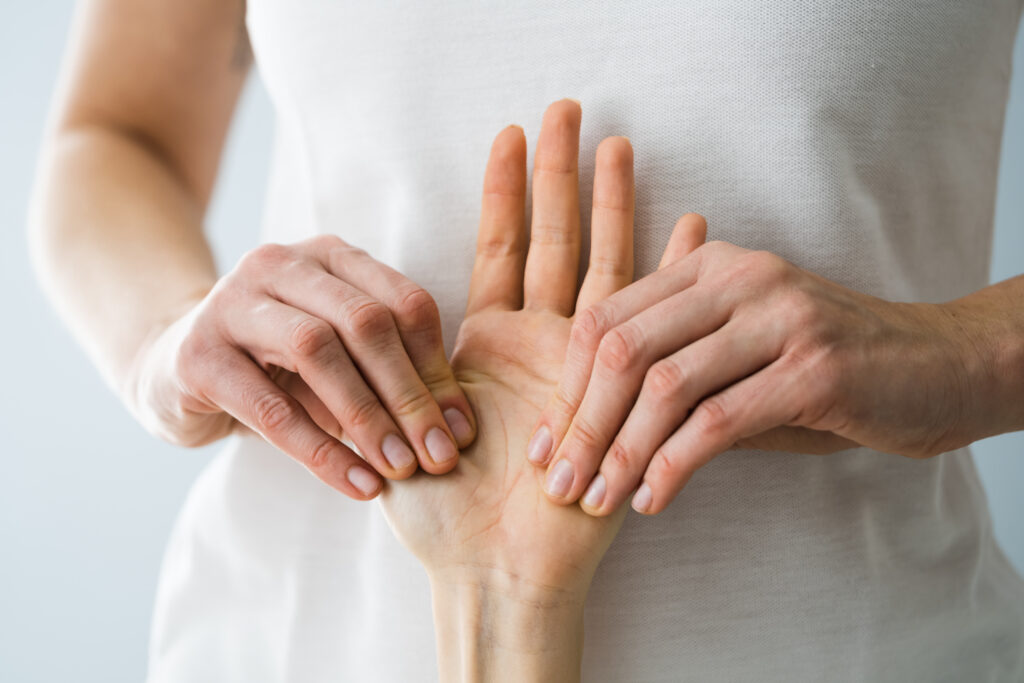
Hand Therapy After Trigger Finger Release Surgery: Your Recovery Guide
After trigger finger release surgery, most patients expect the hard part to be over. The procedure itself is quick — often completed in under 30 minutes — but what happens in the weeks that follow determines how fully your hand actually recovers. Stiffness, swelling, and limited movement are common after surgery, and without a structured rehabilitation plan, those issues can linger far longer than they need to.
Hand therapy after trigger finger release surgery is the clinical bridge between the operating table and getting your hand back to full function. At CORE 3 Physical Therapy, our specialists work with post-surgical patients throughout Montgomery County to rebuild strength, restore range of motion, and get you back to your daily routine as efficiently as possible.
If you’ve recently had trigger finger surgery — or you’re preparing for it — here’s what you need to know about recovery and why hand physical therapy plays a central role in getting there.
What Is Trigger Finger Release Surgery?
Trigger finger happens when the tendon that controls finger movement becomes irritated and inflamed, making it difficult — or sometimes impossible — to straighten the affected finger. When conservative treatments like splinting, anti-inflammatory medication, or corticosteroid injections don’t resolve the problem, trigger finger release surgery is the next step.
The procedure involves a small incision in the palm to release the constricted pulley at the base of the finger, allowing the tendon to move freely again. It is typically performed under local anesthesia as an outpatient procedure, meaning most patients go home the same day. Surgery addresses the mechanical problem — but restoring full hand function is where hand physical therapy takes over.
Why Hand Therapy Is Essential After Orthopedic Surgery
Orthopedic surgery — whether it involves bones, tendons, or soft tissue — creates controlled trauma in the body. Healing is not simply a matter of time; it requires guided movement, load management, and targeted intervention to prevent complications like stiffness, scar tissue buildup, and muscle atrophy.
The American Society of Hand Therapists (ASHT) and the American Academy of Orthopaedic Surgeons (AAOS) both recommend structured rehabilitation following hand and upper extremity procedures. Physical therapy for orthopedic injuries is not optional aftercare — it is a core component of the surgical outcome.
For trigger finger specifically, the tendons and surrounding tissue need progressive, carefully monitored movement to heal correctly. Starting hand physical therapy at the right time — and with the right specialist — makes a measurable difference in how your hand performs months down the line.
Benefits of Hand Therapy After Trigger Finger Release Surgery
Recovering from trigger finger release surgery involves more than waiting for the incision to close. The hand is one of the most complex structures in the body — 27 bones, multiple tendons, and an intricate network of nerves and blood vessels all working in coordination. Hand therapy after trigger finger release surgery addresses each layer of that recovery systematically.
Restoring Full Range of Motion
After surgery, the finger and surrounding tissue will naturally stiffen as the body heals. Without targeted mobilization, that stiffness can become permanent. A certified hand therapist uses specific joint mobilization techniques and progressive range-of-motion exercises to keep the tendon gliding properly through its sheath — the exact mechanism that was repaired during surgery. The goal is not just to straighten the finger, but to restore the full, fluid movement your hand had before the condition developed.
Reducing Swelling and Scar Tissue
Swelling is a normal part of post-surgical healing, but unmanaged swelling slows recovery and increases discomfort. Hand physical therapy incorporates targeted techniques — including manual edema mobilization, compression, and elevation protocols — to reduce fluid buildup efficiently. Scar tissue is equally important to address early. When internal scar tissue forms around the tendon or pulley, it can restrict movement and cause pain long after the surgical site has closed. Therapists use scar mobilization and desensitization techniques to keep tissue pliable and prevent adhesions from limiting function.
Rebuilding Grip Strength
Grip strength typically declines after trigger finger surgery — both from the procedure itself and from the period of limited hand use leading up to it. A structured hand therapy program reintroduces progressive strengthening in a controlled sequence, ensuring the repaired tissue is not overloaded too early. Patients who work with a hand therapist to rebuild grip strength systematically return to work, sport, and daily tasks with significantly more confidence and functional capacity than those who attempt self-directed rehabilitation.
Getting Back to Daily Activities Faster
Typing, cooking, gripping a steering wheel, lifting — these are the benchmarks most patients are focused on. Hand therapy after trigger finger release surgery creates a clear, structured progression toward each of those functional milestones. Your therapist will map your recovery to your specific lifestyle demands, whether that means returning to a desk job, a physically demanding trade, or an active hobby. Physical therapy for orthopedic injuries is most effective when it is individualized — and that is exactly how CORE 3 approaches every patient’s plan.
How Long Does Recovery Take After Trigger Finger Surgery?
Recovery timelines vary depending on how long the finger was affected before surgery, the patient’s overall health, and — critically — whether structured rehabilitation is part of the plan. Patients who commit to hand therapy after trigger finger release surgery consistently reach functional milestones faster than those who manage recovery on their own. Here is a general week-by-week progression when working with a hand therapist:
- Weeks 1–2: Swelling and soreness are managed through elevation, compression, and gentle range-of-motion exercises introduced by your therapist. The focus is on protecting the surgical site while preventing stiffness from setting in. Most patients begin hand physical therapy within the first week post-surgery.
- Weeks 3–4: Active movement increases as tissue heals. Your therapist progresses exercises to improve tendon gliding and begins addressing scar tissue at the incision site. Light functional tasks — such as writing or light gripping — are typically reintroduced during this phase.
- Weeks 5–6: Strengthening exercises are introduced progressively. Grip and pinch strength training begins in earnest, and most patients performing desk work or light daily tasks are functioning at or near full capacity by the end of this phase.
- Weeks 7–12: For patients with physically demanding jobs or active lifestyles, this phase focuses on returning to full load — lifting, gripping under resistance, sport-specific or trade-specific movements. A hand therapist ensures the repaired tendon is ready for those demands before clearance is given.
Most patients reach full functional recovery between 6 and 12 weeks. Without guided rehabilitation, that timeline often extends — and in some cases, residual stiffness or weakness becomes a long-term issue.
Why Choose CORE 3 PT for Hand Therapy in Limerick, PA?
Choosing the right clinic for post-surgical rehabilitation is not a minor decision. The quality of your hand therapy after trigger finger release surgery directly influences how completely — and how quickly — your hand recovers. At CORE 3 Physical Therapy, we built our practice around the kind of individualized, specialist-led care that large PT chains simply cannot replicate.
Our therapists hold advanced specialty certifications that fewer than 20% of physical therapists nationwide obtain. That means when you come in for hand physical therapy at CORE 3, you are working one-on-one with a Doctor of Physical Therapy — not handed off to an aide or rotating through a group session. Every treatment plan is built around your specific surgical outcome, your hand, and your functional goals.
For patients in the area, our CORE 3 Limerick clinic is conveniently located at 536 N. Lewis Rd, Limerick, PA 19468. We offer outpatient physical therapy for orthopedic injuries including post-surgical hand and upper extremity rehabilitation — with appointment availability designed to fit around your schedule.
One detail worth knowing: Pennsylvania is a Direct Access state. That means you do not need a physician referral to begin physical therapy at CORE 3. If you have had trigger finger surgery and are ready to start rehabilitation, you can contact us directly and our team will guide you through the next steps — from your first evaluation through your full recovery.
Frequently Asked Questions
Is hand therapy painful after trigger finger surgery?
Some discomfort during early rehabilitation is normal — the tissue is healing and being progressively mobilized. However, hand therapy after trigger finger release surgery is not designed to be painful. Your therapist at CORE 3 monitors your response to each technique and adjusts the intensity accordingly. The goal is to work within a therapeutic range that promotes healing without aggravating the surgical site. If you experience sharp or worsening pain during or after sessions, that is important feedback your therapist needs to hear immediately.
When should I start hand therapy after surgery?
In most cases, hand physical therapy begins within the first week following trigger finger release surgery. Early mobilization — introduced carefully and at the right intensity — is one of the most evidence-backed strategies for preventing stiffness and adhesion formation post-surgery. Your surgeon will provide clearance guidance, but in Pennsylvania you can also contact CORE 3 directly under Direct Access and our team will coordinate with your surgical provider to confirm the appropriate start point for your rehabilitation.
How many sessions will I need?
The number of sessions depends on several factors — the severity of your condition before surgery, how your tissue responds to rehabilitation, and what functional demands you are returning to. A standard post-surgical hand therapy program typically spans 6 to 8 weeks, with sessions scheduled two to three times per week. Your CORE 3 therapist will establish a clear plan at your initial evaluation and adjust it as your recovery progresses. Most major insurance plans cover physical therapy for orthopedic injuries — contact our Limerick clinic directly for details on your specific coverage.
Ready to Recover? Start Hand Therapy at CORE 3 PT in Limerick, PA
Trigger finger release surgery addresses the mechanical problem — but your hand’s full recovery depends on what happens next. Hand therapy after trigger finger release surgery is the structured, specialist-guided process that takes you from post-operative soreness to full strength, mobility, and function. Skipping or delaying that step is one of the most common reasons patients experience prolonged stiffness or incomplete recovery.
At CORE 3 Physical Therapy, our board-certified specialists provide one-on-one outpatient care designed around your recovery — not a generic protocol. If you are looking for physical therapy in Limerick or anywhere across Montgomery and Bucks Counties, our team is ready to build a plan that gets your hand working the way it should.
You do not need a referral to get started. Pennsylvania’s Direct Access law allows you to schedule directly with our team, and we will handle the coordination from there.
Our physical therapy clinic in Limerick also offers telehealth appointments via Doxy.me for eligible patients throughout Pennsylvania. Call: 484-938-5403.
Disclaimer: The information provided in this article is for general informational purposes only and does not constitute medical advice. Physical therapy treatment plans, techniques, and outcomes vary by individual, condition, and clinical presentation. The exercises and information described here are intended as general education and are not a substitute for evaluation and treatment by a licensed physical therapist. If you are experiencing pain, injury, or any medical condition, consult with a licensed healthcare provider before beginning any exercise or treatment program.

Hatfield
1691 Bethlehem Pike
Hatfield, PA 19440
Phone: 267-308-5330
Fax: 267-308-5331
Chalfont
100 Stewart Ln,
Chalfont, PA 18914
Phone: 215-789-6543
Fax: 215-789-6544
East Norriton
325 West Germantown Pike, Suite 105
East Norriton, PA, 19403
Phone: 267-534-7614
Fax: 267-534-7615
Limerick
536 North Lewis Rd
Limerick, PA, 19468
Phone: 484-938-5403
Fax: 484-938-5164
Warrington
865 Easton Rd, Suite 190
Warrington, PA 18976
Phone: 267-748-2081
Fax: 267-748-2082