
Vestibular Physical Therapy in Warrington, PA
Vestibular physical therapy in Warrington at CORE 3 Physical Therapy helps people with vertigo, dizziness, and unsteadiness get back to moving with confidence. Our clinic at 865 Easton Rd, Suite 190, offers one-on-one care from therapists trained in vestibular evaluation and treatment, including repositioning maneuvers for BPPV. Every plan is built around what is actually causing your symptoms, not a generic exercise sheet.
Warrington is one of five CORE 3 clinics offering vestibular therapy across Bucks and Montgomery Counties, and patients come to us from Warrington, Jamison, Chalfont, Doylestown, Warminster, and Horsham. The information on this page is general. It isn’t a diagnosis, so please talk with your physician and physical therapist about what is right for you.
What Is Vestibular Physical Therapy?
Vestibular physical therapy is a specialized form of rehabilitation for the vestibular system, the parts of the inner ear and brain that help control balance and eye movement. Your brain constantly blends signals from your inner ears, your eyes, and sensors in your muscles and joints to know where you are in space. When one of those signals is off, the mismatch can show up as dizziness, vertigo, unsteadiness, blurred vision, or trouble concentrating.
Through vestibular rehabilitation therapy (VRT), you perform specific, progressive exercises that help your brain recalibrate and rely on accurate signals again. For some conditions, like BPPV, hands-on repositioning maneuvers address the mechanical cause directly. With consistent practice, many patients see their symptoms ease and their confidence in movement return.

Symptoms Vestibular Therapy Can Address
Vestibular problems rarely feel the same from person to person, which is why describing your symptoms in detail matters so much at your first visit. Patients at our Warrington clinic commonly come in with:
- Spinning vertigo when rolling over in bed, getting up, looking up, or bending down
- Feeling lightheaded, “floaty,” or like you’re rocking on a boat
- Unsteadiness when walking, veering to one side, or reaching for walls and counters
- Blurry or “bouncing” vision when you turn your head or walk
- Motion sensitivity in busy places like grocery store aisles, parking lots, or crowds
- Discomfort when scrolling on a phone, watching screens, or riding in a car
- Nausea that comes with head movement
- Brain fog, fatigue, or difficulty concentrating
- Neck tension or headaches that travel with the dizziness
- A growing fear of falling, or avoiding activities you used to enjoy
When to Seek Medical Care First
Some dizziness needs emergency care before physical therapy. If dizziness comes with chest pain, fainting, a sudden severe headache, facial droop, slurred speech, weakness or numbness, or new vision changes, call 911 or go to the nearest emergency room right away. If your symptoms are new and intense, a medical evaluation is also a smart first step.
Our therapists see a wide range of vestibular and balance conditions in patients of all ages. Vestibular physical therapy in Warrington can support people with:
Benign Paroxysmal Positional Vertigo (BPPV): Brief, intense spinning triggered by changes in head position, caused by displaced calcium crystals in the inner ear.
Vestibular Hypofunction: Reduced function in one or both inner ears, often leading to imbalance or ongoing dizziness.
Vestibular Neuritis and Labyrinthitis: Inflammation affecting the inner ear or its nerve, which can leave lingering dizziness and imbalance after the initial illness.
Post-Concussion Dizziness: Motion sensitivity, visual tracking problems, and balance changes after a head injury.
Ménière’s Disease: Episodes of vertigo with hearing changes and ringing in the ears. Therapy focuses on balance and confidence as part of care led by your physician.
Vestibular Migraine: Dizziness linked to migraine, sometimes without a headache, treated alongside medical management.
Persistent Postural-Perceptual Dizziness (PPPD): Ongoing dizziness made worse by movement, busy visual environments, or stress.
Central Vestibular Conditions: Balance and dizziness problems related to the brain, such as after a vestibular stroke or with multiple sclerosis.
Acoustic Neuroma: Balance rehabilitation before and after surgery.
Neck-related dizziness, headaches, and ear or jaw pain that contribute to symptoms.
Decreased balance and falls, including multifactorial dizziness in older adults.
No matter how long you’ve lived with your symptoms, it’s worth having them properly evaluated.
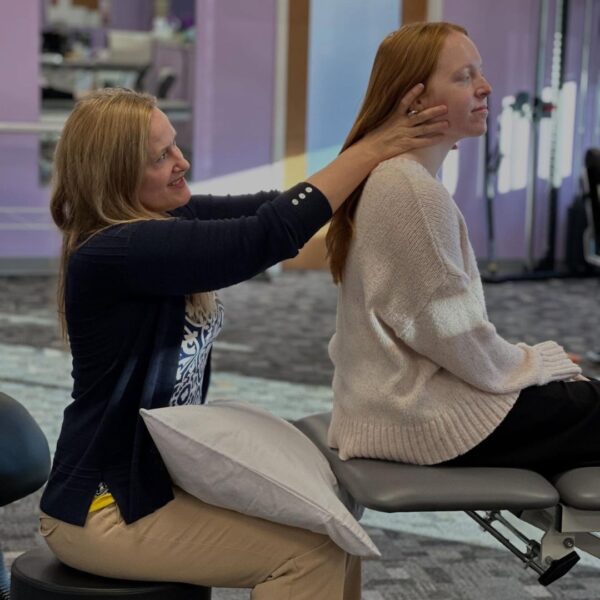
BPPV Treatment at Our Warrington Clinic
BPPV is the most common cause of vertigo, and it is often one of the most treatable. It happens when tiny calcium carbonate crystals (otoconia) shift out of their normal spot in the inner ear and drift into one of the semicircular canals. When you move your head in certain directions, the crystals move the fluid in that canal, and your brain reads it as spinning. Episodes usually last less than a minute but can feel frightening.
How We Test for BPPV
Your therapist identifies which ear and which canal are involved before choosing a treatment. The Dix-Hallpike test checks the posterior canal, the most commonly affected one, while the supine roll test checks the horizontal canal. During these tests we watch your eyes closely, because the direction of the involuntary eye movements (nystagmus) tells us exactly where the crystals are. Our vestibular exam uses infrared video goggles, which make subtle eye movements much easier to see than with the naked eye.
How We Treat BPPV
Once the affected canal is identified, we use a canalith repositioning maneuver matched to it, such as the Epley maneuver for the posterior canal or a roll maneuver for the horizontal canal. These guided head and body movements use gravity to move the crystals back where they belong. It's normal to feel brief vertigo during the maneuver, and your therapist will keep you supported the entire time.
Many people with BPPV improve within one to three visits, though it varies with the type and how long symptoms have been present. Some patients notice mild unsteadiness for a while after the vertigo settles, so we often add balance work and vestibular rehabilitation exercises for BPPV to round out recovery. BPPV can return, so we also teach you what to watch for and when to come back in. Please avoid trying online maneuvers on your own before an evaluation, since treating the wrong ear or canal may not help.

What to Expect at Your Vestibular Evaluation
Your first visit is a thorough, one-on-one evaluation with a physical therapist trained in vestibular disorders, and it usually covers these steps:
- Your history. We ask when your symptoms started, what triggers them, and how long episodes last. Whether dizziness lasts seconds, hours, or is constant is one of the biggest clues to its cause.
- Eye movement testing. We assess how your eyes track, hold steady, and respond to head movement, often using infrared video goggles.
- Positional testing. If your history suggests BPPV, we perform positional tests to confirm it and identify the canal involved.
- Balance and gait. We look at how you stand and walk on different surfaces, with eyes open and closed, and while turning your head.
- Neck and posture screen. We check neck mobility and strength, since the neck can contribute to dizziness and headaches.
- Motion sensitivity. We note which movements bring on symptoms and how strongly, so we can measure your progress.
- Your plan. We explain what we found in plain language, outline your treatment plan, and start your home exercises. If anything points to a medical issue needing follow-up, we coordinate with your physician.
How to Prepare
Wear comfortable clothes and supportive shoes, and bring a list of your medications plus any ENT, neurology, or imaging results. If your dizziness is severe, consider asking someone to drive you, since testing can briefly bring on symptoms. It also helps to jot down when your dizziness started, what seems to trigger it, and how long episodes last, so nothing slips your mind during the visit. If you have questions before your appointment, our Warrington team is always happy to help.
Your Vestibular Treatment Plan
Your treatment plan is built around your evaluation findings and adjusted as you improve. Depending on your needs, it may include:
- Canalith Repositioning Maneuvers: Including the Epley maneuver for BPPV.
- Gaze Stabilization and Vestibulo-Ocular Reflex (VOR) Training: Exercises that help your eyes stay focused while your head moves.
- Habituation Exercises: Controlled, repeated exposure to movements that provoke symptoms, so your brain becomes less sensitive to them.
- Static and Dynamic Balance Training: Progressing from steady standing to walking, turning, and uneven surfaces.
- Functional Activity Training: Practicing real tasks like bending, reaching into cabinets, climbing stairs, and turning quickly.
- Neck Range of Motion and Strengthening: When neck stiffness or posture contributes to symptoms.
- Lower Body and Core Strengthening: Building the stability that supports balance and helps prevent falls.
- Education and a Home Exercise Program: Clear guidance to keep you progressing between visits.
How Treatment Progresses
Early sessions focus on calming symptoms, treating any BPPV, and starting short, manageable exercises. As you improve, we gradually raise the challenge with faster head movements, busier visual backgrounds, and less stable surfaces. Later sessions focus on your real-life goals, such as walking through a store, exercising, or returning to work. Some exercises may briefly stir up mild symptoms, which is often part of the process, and your therapist will adjust the intensity so it stays manageable.
The number of visits depends on your diagnosis and how long you’ve had symptoms. BPPV may respond in a few visits, while conditions like vestibular hypofunction or post-concussion dizziness often need several weeks of guided progression.
How Vestibular Physical Therapy Helps
Vestibular symptoms can feel unpredictable and isolating, so our goal is to help you feel steady and in control again. With supportive, one-on-one care, vestibular therapy can help you:
- Reduce dizziness and vertigo
- Improve balance and coordination
- Regain independence in daily activities
- Return to walking, driving, shopping, or exercising with more confidence
- Lower your risk of falls and injuries
- Feel less anxious about movement or busy environments
Whether your symptoms started recently or have lingered for years, vestibular physical therapy in Warrington offers an evidence-based path forward.
Who Should Consider Vestibular Rehab?
Vestibular rehab isn’t just for athletes or people recovering from an injury. It can help anyone dealing with:
- Frequent dizziness or spinning sensations
- Difficulty walking or standing still
- Sensitivity to light or motion
- Trouble focusing or reading while moving
- Fear of falling
We commonly see older adults, professionals with visually demanding jobs, students, athletes, and people recovering from illness or concussion. In Pennsylvania, many patients can start outpatient physical therapy through direct access without a referral, though insurance requirements vary, so it’s worth confirming coverage before your first visit.
Why Choose CORE 3 for Vestibular Physical Therapy in Warrington?
When you’re struggling with dizziness, you need a team that listens closely and tailors every session to your specific symptoms. Here’s what sets our Warrington clinic apart:
- Specialized, Certified Therapists: Our team includes board-certified specialists and clinicians trained in vestibular evaluation and canalith repositioning.
- Infrared Video Goggles: Used as a standard part of our vestibular exam for a clearer view of the eye movements that guide diagnosis.
- One-on-One Sessions: No hand-offs and no group therapy, just focused, personalized care.
- Progressive Approach: We adjust your plan as your symptoms improve so you keep moving forward.
- Patient Education: We help you understand what’s happening in your body and what to expect from your treatment.
- Comprehensive Care Network: If you also need pelvic floor therapy, orthopedic rehab, or postpartum care, our clinics work together to meet your full range of needs.
Convenient, Connected Care
While you may be looking for vestibular physical therapy in Warrington, PA, we also serve patients throughout Bucks and Montgomery Counties. Our team regularly works with individuals from surrounding towns, and we coordinate care across our specialized programs to ensure continuity and progress.
You may also be interested in:
- Expert, compassionate physical therapy in Chalfont, PA for orthopedic and sports injuries
- Whole-body pelvic floor therapy in Doylestown, PA for pain, incontinence, and pregnancy-related issues
- Gentle, effective postpartum physical therapy in New Britain, PA to help new moms recover strength and stability
- Recovery-focused post-op physical therapy in Plumsteadville, PA for joint replacements, surgeries, and more
- Movement-based orthopedic physical therapy in Souderton, PA for back pain, joint issues, and overuse injuries
- Proactive sports injury rehabilitation in Hilltown, PA for athletes of all ages and skill levels
- Specialized Parkinson’s physical therapy in North Wales, PA for improved mobility and independence
Our team works collaboratively across locations to deliver consistent, personalized care—wherever you need it.
Frequently Asked Questions
Where is CORE 3's Warrington clinic located?
Our Warrington clinic is at 865 Easton Rd, Suite 190, Warrington, PA 18976, on Route 611. You can reach us at 267-748-2081. We’re open Monday 8am–7pm, Tuesday 11:30am–3:30pm, Wednesday 7am–3pm, Thursday 8am–6pm, and Friday 7am–2pm.
Can I drive myself to my vestibular evaluation?
Many patients do. If your dizziness is severe, or you’re unsure how you’ll feel, it’s safer to bring a driver, because positional testing and repositioning maneuvers can briefly bring on vertigo.
Will the Epley maneuver make me dizzy?
Usually, yes, for a short time. Brief vertigo during the maneuver is expected and often means the crystals are moving. Your therapist supports you throughout and lets symptoms settle before you get up.
Can I just do vestibular exercises at home?
Home exercises are a big part of vestibular rehab, but they work best when chosen after a proper evaluation. The right exercise depends on your diagnosis, and some, like BPPV maneuvers, need to target a specific ear and canal to help.
Do I need a referral for vestibular therapy in Warrington?
In Pennsylvania, many patients can start physical therapy through direct access without a referral. Insurance plans have their own rules, so we recommend confirming your coverage before your first visit.
Ready to Regain Your Balance?
If dizziness, vertigo, or unsteadiness is holding you back, vestibular physical therapy in Warrington can help you take the next step. We take the time to understand what you’re experiencing and build a plan around your goals, so you can move with more confidence.
Visit us at 865 Easton Rd, Suite 190, Warrington, PA 18976 or call 267-748-2081. You can also request an appointment online, and we’ll help you schedule your vestibular evaluation.
Our Locations
East Norriton
325 West Germantown Pike, Suite 105
East Norriton, PA 19403
Phone: 267-534-7614
Fax: 267-534-7615
Hatfield
1691 Bethlehem Pike
Hatfield, PA 19440
Phone: 267-308-5330
Fax: 267-308-5331
Chalfont
100 Stewart Ln
Chalfont, PA 18914
Phone: 215-789-6543
Fax: 215-789-6544
Limerick
536 North Lewis Rd
Limerick, PA 19468
Phone: 484-938-5403
Fax: 484-938-5164
Explore our locations page to learn more about the communities we serve and the comprehensive physical therapy services we offer.