
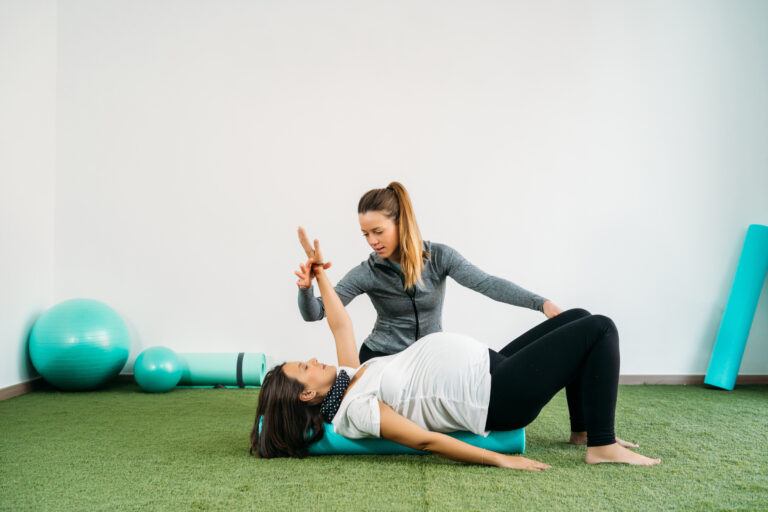
A prenatal and postpartum physical therapy timeline doesn’t have to be complicated — it simply means having support at the stages when your body needs it most, from the earliest weeks of pregnancy through full postpartum recovery. Many women don’t realize physical therapy can help proactively, not just after something starts to hurt. Whether you’re preparing for labor or several months past delivery, there’s a stage of this timeline that applies to you.
Start Physical Therapy Early in Pregnancy: Building a Foundation (First & Second Trimester)
Starting physical therapy early in pregnancy is about building a foundation before discomfort sets in, not waiting until something hurts. As the hormone relaxin increases joint laxity throughout the first and second trimester, your center of gravity and posture begin shifting well before your bump is noticeable.
A physical therapist can assess your movement patterns early and address small imbalances before they become bigger problems later in pregnancy. This typically includes:
- Postural assessment and gentle correction
- Core and hip strengthening that’s safe for early pregnancy
- Education on body mechanics for daily tasks like lifting or bending
- Baseline pelvic floor awareness exercises
Getting ahead of these changes now can make the third trimester and postpartum recovery considerably smoother.
Physical Therapy During Pregnancy by Trimester: Third Trimester Prep for Labor
Physical therapy during pregnancy by trimester shifts noticeably by the third trimester, when your growing baby places new demands on your joints, nerves, and pelvic floor. This is when many women first come to Core 3 for relief and preparation.
Pelvic Girdle Pain and Sciatica
As the pelvis widens to prepare for delivery, pain around the pubic bone, hips, or lower back — often called pelvic girdle pain — becomes more common. Pressure on the sciatic nerve can also cause pain radiating down the leg. A physical therapist can guide you through targeted stretches and manual techniques to relieve both.
Rib Flare
As the uterus expands upward, your rib cage can flare outward, leading to discomfort under the chest and shortness of breath. Breathing mechanics work and gentle mobility exercises can ease this.
Preparing the Pelvic Floor for Delivery
Rather than only strengthening, third-trimester pelvic floor work often focuses on relaxation and coordination — learning to release these muscles on command supports a smoother delivery. If you want a deeper look at how this preparation works, our guide on what prenatal physical therapy actually involves breaks down the process in more detail.
When to Start Postpartum Physical Therapy: The First 6 Weeks
Knowing when to start postpartum physical therapy comes down to understanding what your body just went through. Whether you delivered vaginally or by C-section, your pelvic floor, abdominal wall, and joints have all been through significant change, and healing doesn’t happen on a fixed schedule.
Here’s what’s typically happening in this early window:
- Vaginal delivery: the pelvic floor has stretched significantly and may have sustained tearing; swelling and tenderness are common in the first days and weeks.
- C-section delivery: you’re healing from major abdominal surgery, so core activation, scar mobility, and posture all need gentle, guided attention.
- Both: hormone levels are shifting again, joint laxity hasn’t fully resolved, and new caregiving demands (feeding positions, lifting a car seat, broken sleep) put repetitive strain on the body.
One of the most helpful things to know is that you don’t need a referral to get started. Core 3 offers direct access physical therapy, meaning you can schedule an evaluation as soon as you’re ready rather than waiting weeks for a doctor’s referral. According to the American College of Obstetricians and Gynecologists (ACOG), pelvic floor exercises can be started in the immediate postpartum period for most women, and a systematic review of postpartum urinary incontinence treatment found pelvic floor muscle training to be an effective first-line, conservative option. Starting early — with guidance — gives your body the best chance to heal well from the beginning.
Postpartum Physical Therapy and Pelvic Floor Recovery: 6 Weeks and Beyond
Postpartum physical therapy and pelvic floor recovery often continues well past the standard six-week checkup, since many symptoms don’t fully resolve on their own in that window.
Diastasis Recti
It’s common for the abdominal muscles to separate during pregnancy, and for some women this gap doesn’t close naturally afterward. A physical therapist can assess the separation and guide safe, progressive core work to restore function. For a closer look at this specific condition, see our full guide on how physical therapy addresses diastasis recti.
Pelvic Floor Dysfunction
Leaking with a cough or sneeze, a feeling of heaviness, or discomfort during intimacy are all signs of pelvic floor dysfunction — and none of them are something you have to just live with. Targeted pelvic floor therapy can meaningfully improve these symptoms.
Return to Exercise
Getting back to running, lifting, or your pre-pregnancy workout routine works best with a gradual, guided plan rather than jumping back in all at once. A physical therapist can help you rebuild strength safely and watch for warning signs along the way. Our article on postpartum recovery and physical therapy goes into more detail on rebuilding strength at this stage.
Frequently Asked Questions About Prenatal and Postpartum Physical Therapy Timeline
When should I start prenatal physical therapy?
There’s no single “right” time — many women benefit from starting in the first or second trimester, before discomfort sets in, though it’s never too late to begin at any point in pregnancy.
Do I need a doctor’s referral to start postpartum PT?
No. Pennsylvania allows direct access to physical therapy, meaning you can schedule an evaluation at Core 3 without a referral.
How soon after a C-section can I start physical therapy?
This depends on your individual healing and should be discussed with your physician, but many women begin gentle, guided work in the early postpartum weeks once cleared for activity.
Is it normal to still have pelvic floor symptoms months after birth?
It’s common, but “common” doesn’t mean it has to be permanent — pelvic floor symptoms lasting months postpartum are very treatable with the right physical therapy plan.
Prenatal & Postpartum Physical Therapy at Core 3: Schedule a Visit
No matter where you are on this timeline — early pregnancy, preparing for delivery, or months into postpartum recovery — our board-certified specialists in pelvic health and orthopedics are here to help. We’d love to talk through what you’re experiencing and build a plan around it. Reach out to our team to schedule a visit at any of our five convenient locations:
- Hatfield: 1691 Bethlehem Pike, Hatfield, PA 19440 — 267-308-5330
- East Norriton: 325 W. Germantown Pike, Ste. 105, East Norriton, PA 19403 — 267-534-7614
- Chalfont: 100 Stewart Lane, Ste. 100, Chalfont, PA 18914 — 215-789-6543
- Limerick: 536 North Lewis Rd, Limerick, PA 19468 — 484-938-5403
- Warrington: 865 Easton Rd, Suite 190, Warrington, PA 18976 — 267-748-2081
Can’t make it into a clinic? We also offer telehealth physical therapy, so prenatal and postpartum care is still within reach if you’re recovering at home, managing a newborn’s schedule, or simply prefer a virtual visit.
